How to Test the Quality of a Heavy Duty Grow Bag Before Bulk Purchase
- Share
- Issue Time
- Aug 6,2026
Summary
Before placing a bulk order, professional growers need to evaluate grow bag quality carefully. This guide explains key quality tests for heavy duty grow bags, including fabric strength, GSM, stitching quality, handle load capacity, UV resistance, and drainage performance. Learn how to select a reliable grow bag manufacturer and bulk supplier for commercial nursery production.
How to Test the Quality of a Heavy Duty Grow Bag Before Bulk Purchase
For commercial nurseries, tree farms, and professional growers, purchasing grow bags in bulk is a long-term investment.
A poor-quality grow bag may look acceptable during the first inspection, but problems can appear after months of outdoor use:
•Fabric tearing
•Handle failure
•Seam damage
•UV degradation
•Poor drainage performance
These issues can lead to plant losses, increased labor costs, and unnecessary replacement expenses.
Therefore, before placing a large order, buyers should understand how to evaluate grow bag quality and select a reliable grow bag manufacturer.
1. Check the Fabric Material Quality
The first factor that determines grow bag performance is the fabric material.
Professional heavy duty grow bags are usually manufactured from high-strength PP (polypropylene) fabric.
When evaluating fabric quality, buyers should check:
Material Type
High-quality PP fabric provides:
•Good tensile strength
•Strong durability
•Resistance to outdoor conditions
•Stable structure during long-term use
Low-quality materials may become weak after exposure to sunlight or repeated handling.
2. Evaluate GSM (Fabric Weight)
GSM means "grams per square meter" and represents the weight and thickness of the fabric.
Generally:
•Higher GSM means stronger fabric
•Lower GSM means lighter material
For commercial applications, choosing the correct GSM is important because plants can become very heavy as they grow.
A professional supplier should be able to provide clear information about:
•Fabric GSM
•Material specifications
•Production standards
The correct GSM depends on:
•Grow bag size
•Plant weight
•Growing period
•Transportation requirements
3. Test Stitching Quality
The fabric itself may be strong, but poor stitching can cause failure.
Before bulk purchasing, buyers should inspect:
Stitch Density
More stitches generally provide stronger seams.
Stitch Uniformity
Good stitching should be:
•Straight
•Even
•Without skipped stitches
Seam Strength
The bottom and side seams are the areas that carry the most pressure.
For large tree planting bags, reinforced stitching is especially important because soil and plant weight can become very heavy.
4. Check Handle Load Capacity
Handles are an important feature for commercial growers because large plants often need to be moved.
A quality grow bag should have:
•Strong handle attachment
•Reinforced stitching around handles
•Reliable lifting capacity
Before bulk orders, buyers should request handle load testing.
For example, HOKBG grow bags are designed with reinforced handles, and single-side handles can support high loads depending on bag size and structure.
A weak handle can create safety risks during transportation.
5. Test UV Resistance Performance
Grow bags are normally used outdoors, which means they are exposed to sunlight for long periods.
Without UV protection, PP materials can:
•Become brittle
•Lose strength
•Crack after prolonged exposure
Professional UV resistant grow bags use UV-stabilized materials to improve outdoor durability.
When evaluating suppliers, buyers should ask:
•Is UV treatment added?
•Is there a UV test report?
•How long can the product be used outdoors?
A reliable manufacturer should provide supporting technical information.
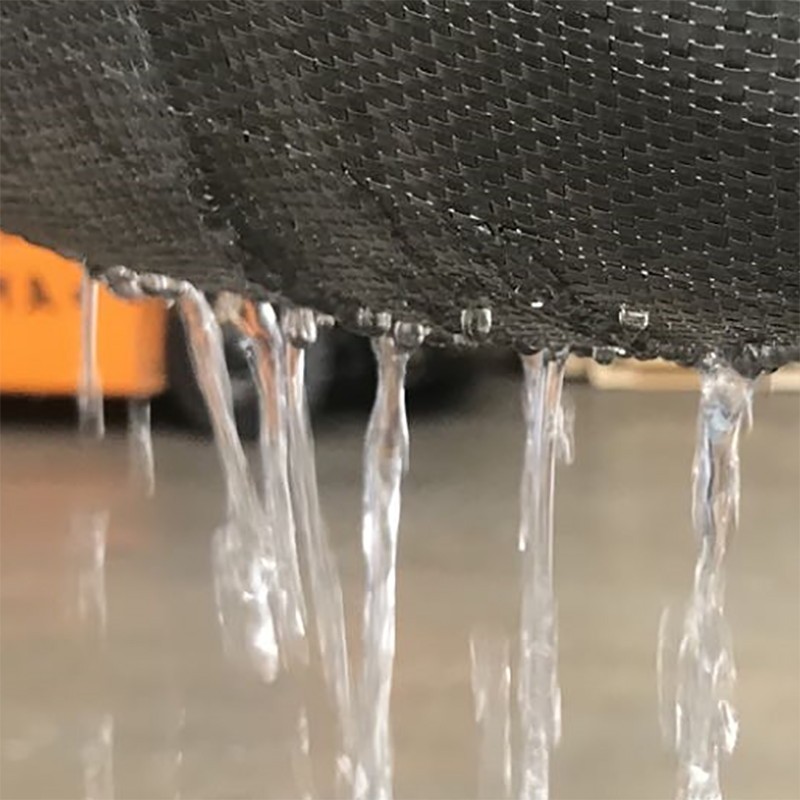
6. Check Water Permeability and Breathability
A good grow bag should provide both water drainage and air circulation.
Poor-quality bags may:
•Hold excessive water
•Reduce oxygen supply
•Affect root development
High-quality breathable grow bags allow:
•Excess water to drain quickly
•Oxygen to reach the root zone
•Better root development through air pruning
This is especially important for:
•Commercial nursery production
•Tree cultivation
•Long-term container growing
7. Verify Product Size Accuracy
For bulk buyers, size consistency is extremely important.
Before ordering, check:
•Diameter
•Height
•Capacity
•Sewing dimensions
A professional bulk grow bags supplier should maintain consistent production standards across thousands of pieces.
Incorrect sizes can affect:
•Growing media quantity
•Plant development
•Transportation planning
8. Ask for Quality Certifications and Testing Reports
A reliable grow bag manufacturer should be able to provide quality information, such as:
•Material test reports
•UV resistance test results
•Production inspection records
•Sample approval process
For commercial buyers, these documents reduce purchasing risks and help ensure stable product quality.
9. Why Choose HOKBG as Your Grow Bag Manufacturer?
HOKBG specializes in manufacturing professional PP grow bags for:
•Commercial nurseries
•Tree farms
•Landscaping companies
•Agricultural projects
Our grow bags are designed with:
High-Strength PP Fabric
Providing excellent durability and load-bearing performance.
UV Resistant Material
Suitable for long-term outdoor applications.
Reinforced Stitching
Improving structural strength and reliability.
Strong Handles
Helping customers move heavy plants safely.
Complete Size Range
From:
5 Gallon to 1250 Gallon
Meeting different plant production requirements.
Grow Bag Quality Checklist Before Bulk Purchase
Quality Item | What to Check |
|---|---|
Fabric Material | PP quality and durability |
GSM | Suitable thickness and strength |
Stitching | Seam strength and consistency |
Handles | Load capacity |
UV Resistance | Outdoor durability |
Drainage | Water permeability |
Size Accuracy | Production consistency |
Testing Reports | Supplier reliability |
Conclusion
Choosing the right grow bag supplier is not only about price.
For commercial growers, product quality directly affects plant health, labor efficiency, and long-term production costs.
Before placing a bulk order, buyers should carefully evaluate fabric strength, stitching quality, UV resistance, drainage performance, and supplier reliability.
By working with an experienced grow bag manufacturer, growers can ensure they receive durable, consistent, and professional-quality containers for successful plant production.