Growing Olive Trees in Large Planter Bags: Commercial Guide
- Share
- Issue Time
- Aug 19,2026
Summary
Growing olive trees in large planter bags gives commercial nurseries better control over root development, irrigation, transportation, and transplanting. This guide explains how to choose the right container, manage growing media and water, prevent root circling, and select durable grow bags for long-term outdoor production. It also covers key factors such as UV resistance, fabric strength, drainage, breathability, and handling for professional olive tree growers.
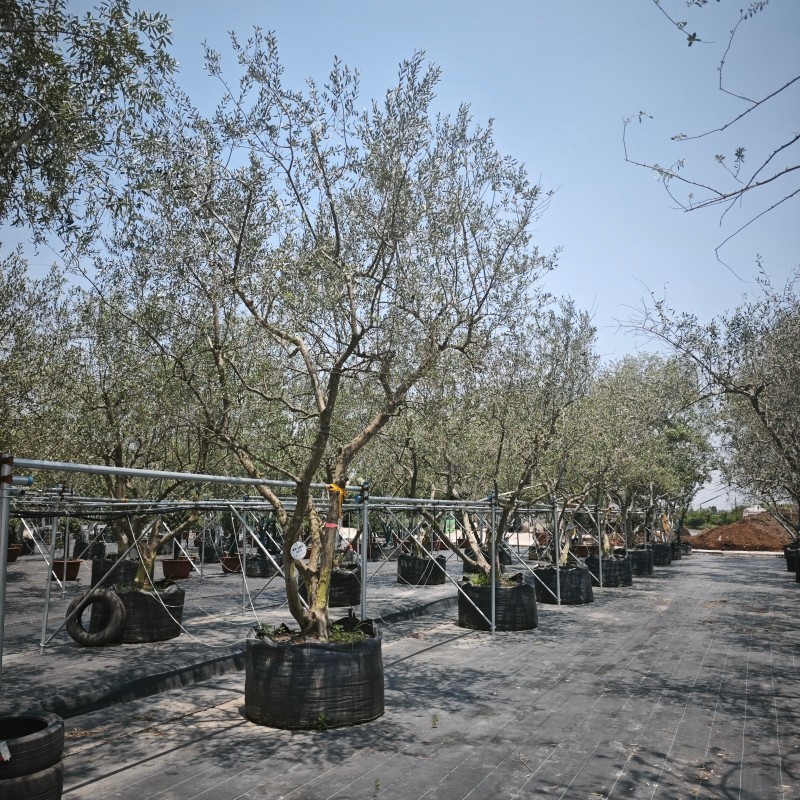
Growing Olive Trees in Large Planter Bags: Commercial Guide
Olive trees are widely grown for fruit production, landscaping, ornamental use, and Mediterranean-style gardens. As commercial nurseries increasingly produce larger and more established trees before sale, container selection becomes an important part of production management.
Large planter bags can provide a practical solution for growing olive trees while allowing nurseries to control root development, improve handling, and move trees more efficiently.
However, successful container-grown olive tree production depends on more than simply choosing a large bag. Growing media, irrigation, root management, climate, and container quality all need to be considered.
1. Why Grow Olive Trees in Large Planter Bags?
Olive trees can remain in containers for relatively long production periods. During this time, the root system needs enough space and a suitable growing environment.
Large planter bags can offer several advantages for commercial growers.
Better Root-Zone Management
Unlike field-grown trees, container-grown olive trees have a defined root zone that can be managed more easily.
Growers can control:
•Growing media
•Irrigation
•Fertilization
•Root development
•Transplant timing
This makes production more predictable.
Easier Transportation
Large olive trees can become difficult to move once established in the ground.
Growing trees in large planter bags for trees allows nurseries to move plants using suitable handling equipment while keeping the root ball contained.
This can be particularly useful when supplying:
•Landscape contractors
•Garden centers
•Hotels and resorts
•Residential projects
•Urban landscaping projects
2. Root Development Is One of the Most Important Factors
A healthy root system is essential when producing container-grown olive trees.
One common problem with rigid plastic containers is root circling. When roots reach the container wall, they may continue growing along the inside surface.
Over time, excessive circling can create a dense and poorly distributed root system.
Breathable fabric containers can help address this issue through air pruning.
When root tips reach the breathable container wall and are exposed to air, their extension is naturally limited. This encourages the development of additional lateral and fibrous roots.
For commercial growers, the goal is not simply to produce a large root ball, but to develop a well-distributed and functional root system that can establish successfully after transplanting.
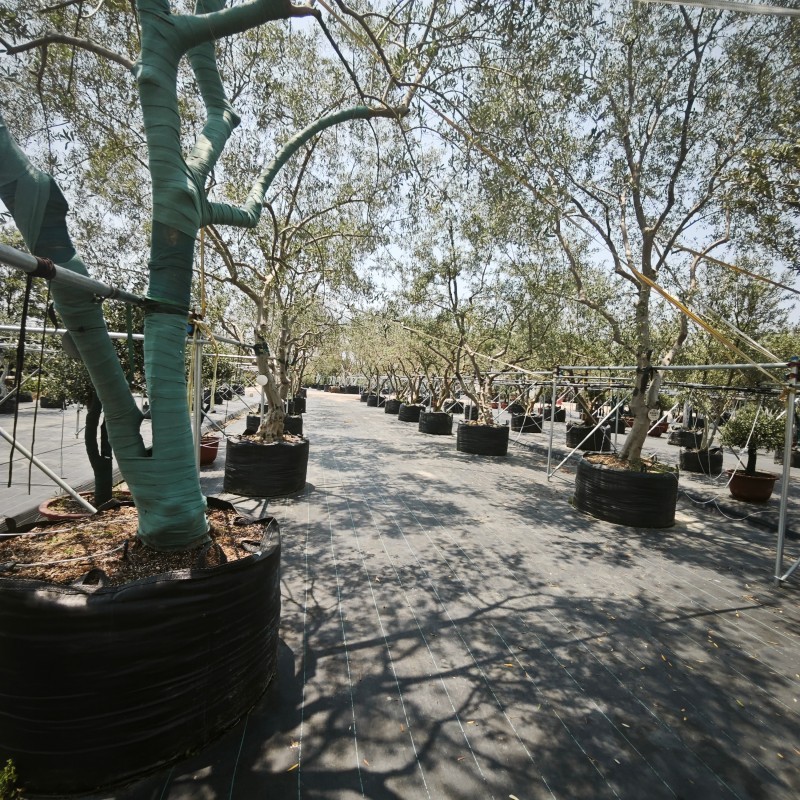
3. Choosing the Right Size for Olive Trees
There is no single "best" planter bag size for every olive tree.
The appropriate size depends on:
•Tree age
•Trunk diameter
•Canopy size
•Root volume
•Expected time in the container
•Final selling size
•Local climate
A useful principle is to choose a container that provides sufficient root space without creating unnecessary excess volume.
Too Small
A container that is too small can restrict root growth and may require frequent upgrading.
Too Large
An unnecessarily large container can increase:
•Growing media costs
•Irrigation requirements
•Handling weight
•Production space
Commercial nurseries should therefore plan container sizes according to the production cycle rather than selecting the largest available bag.
4. Growing Media for Container-Grown Olive Trees
The growing medium has a major influence on olive tree performance.
A suitable medium should balance:
Water retention + drainage + air space + structural stability
Olive trees generally perform better when excess water can drain away efficiently.
Depending on local materials and production systems, commercial growers may use combinations of:
•Coco coir
•Peat-based materials
•Compost or organic matter
•Perlite
•Pine bark or other coarse materials
The exact mix should be adjusted according to the local climate, irrigation system, and quality of available materials.
In hot climates, a medium that drains well but retains enough moisture between irrigation cycles can help reduce plant stress.
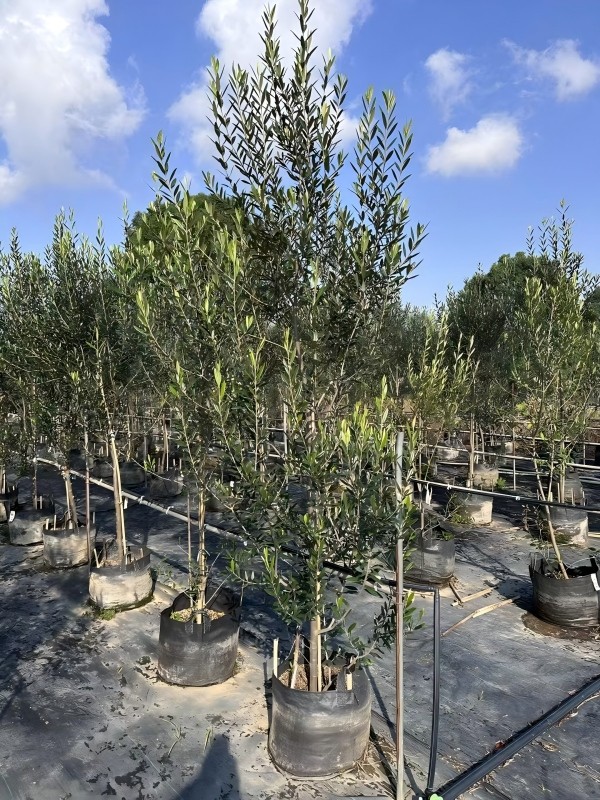
5. Irrigation Management in Large Grow Bags
Irrigation is one of the most important management factors when growing olive trees in containers.
A large planter bag does not automatically mean the plant requires more frequent watering.
Instead, irrigation should be based on:
•Weather
•Plant size
•Growing media
•Evaporation rate
•Root development
•Container drainage
Avoid Constant Saturation
Excessive irrigation can reduce oxygen in the root zone.
Avoid Severe Drying
Although olive trees are relatively drought tolerant once established, young container-grown trees still require consistent water management.
For commercial production, drip irrigation and moisture monitoring can help growers apply water more efficiently.
6. Why Drainage and Breathability Matter
Olive trees are often associated with dry Mediterranean climates, but container production still requires careful water management.
A good planter bag should allow excess water to escape while maintaining sufficient moisture around the roots.
Breathable fabric can also improve air exchange around the root zone.
This combination of:
•Drainage
•Airflow
•Root-zone oxygen
creates a more suitable environment for healthy root development.
7. UV Resistance Is Important for Long-Term Outdoor Production
Commercial olive trees may remain outdoors in containers for months or even several years.
During this time, planter bags are exposed to:
•Direct sunlight
•UV radiation
•Heat
•Rain
•Wind
For this reason, UV resistant grow bags are an important consideration for professional nurseries.
UV-stabilized PP material helps maintain fabric performance during prolonged outdoor exposure and can reduce premature material degradation.
When purchasing commercial nursery grow bags, buyers should ask suppliers about:
•UV protection
•Material specifications
•Fabric strength
•Outdoor durability
•Available test reports
8. Why High-Strength Planter Bags Matter for Large Olive Trees
As olive trees become larger, the combined weight of the tree, growing media, and water can become substantial.
A professional heavy duty grow bag should therefore have:
•Strong fabric
•Reliable seams
•Reinforced handle areas
•Good load-bearing performance
The handles are particularly important because they may be used repeatedly during nursery operations.
For large trees, growers should test the complete bag structure rather than evaluating fabric strength alone.
9. Common Mistakes When Growing Olive Trees in Containers
Mistake 1: Choosing the Bag Based Only on Tree Height
Root volume is just as important as above-ground plant size.
Mistake 2: Using a Poorly Draining Growing Medium
Excess water can create root-zone problems.
Mistake 3: Ignoring UV Resistance
A container may look strong when new but deteriorate after prolonged sunlight exposure.
Mistake 4: Overwatering
More water does not always mean better growth.
Mistake 5: Ignoring Transportation Requirements
Large trees require containers with reliable handles and strong seams.
Mistake 6: Keeping Trees in the Same Container for Too Long
Even with a good container, root development should be monitored regularly.
10. What Should Commercial Buyers Look for in Olive Tree Grow Bags?
Before placing a bulk order, professional nurseries should evaluate:
Quality Factor | What to Check |
|---|---|
Material | PP quality and fabric strength |
UV Resistance | Suitability for outdoor cultivation |
Breathability | Air exchange around roots |
Drainage | Ability to remove excess water |
Stitching | Seam strength and consistency |
Handles | Reinforcement and load capacity |
Size | Appropriate for the production cycle |
Durability | Performance during long-term use |
It is also recommended to test samples under actual nursery conditions before purchasing large quantities.
11. HOKBG Large Planter Bags for Commercial Tree Production
HOKBG manufactures professional PP grow bags for commercial horticulture and tree production.
Our grow bags are designed to address the practical requirements of professional growers, including:
•High-strength PP fabric
•UV-resistant material
•Breathable structure
•Good drainage
•Reinforced handles
•Strong stitching
•Multiple capacity options
Rather than simply choosing a container based on size, we recommend considering the plant type, growing period, climate, irrigation method, and handling requirements when selecting a suitable grow bag.
Contact HOKBG for Samples and Technical Information
If you are growing olive trees or other large landscape and fruit trees, HOKBG welcomes you to contact us.
We can provide:
•Product information
•Technical specifications
•Sample evaluation
•Recommendations for different plant types and growing conditions
Free samples are available for customers who want to evaluate our grow bags before placing a bulk order. Please note that the customer is responsible for the sample shipping/freight cost.
If you need technical information or want to discuss your nursery requirements, please contact HOKBG. Our team will be happy to provide professional support and help you select a suitable grow bag solution.
Conclusion
Growing olive trees in large planter bags can give commercial nurseries greater control over root development, irrigation, transportation, and transplanting.
However, successful production requires more than simply choosing a large container. Growers should consider root space, growing media, drainage, irrigation, UV resistance, fabric strength, stitching, and handling requirements.
For professional olive tree production, a well-designed grow bag can become an important part of an efficient nursery production system.