Growing Maple Trees in Grow Bags: A Complete Commercial Guide
- Share
- Issue Time
- Aug 13,2026
Summary
Growing maple trees in grow bags requires proper container selection, root management, watering control, and seasonal care. This guide explains how commercial nurseries can improve maple tree quality through breathable grow bags, air pruning technology, and professional cultivation practices.
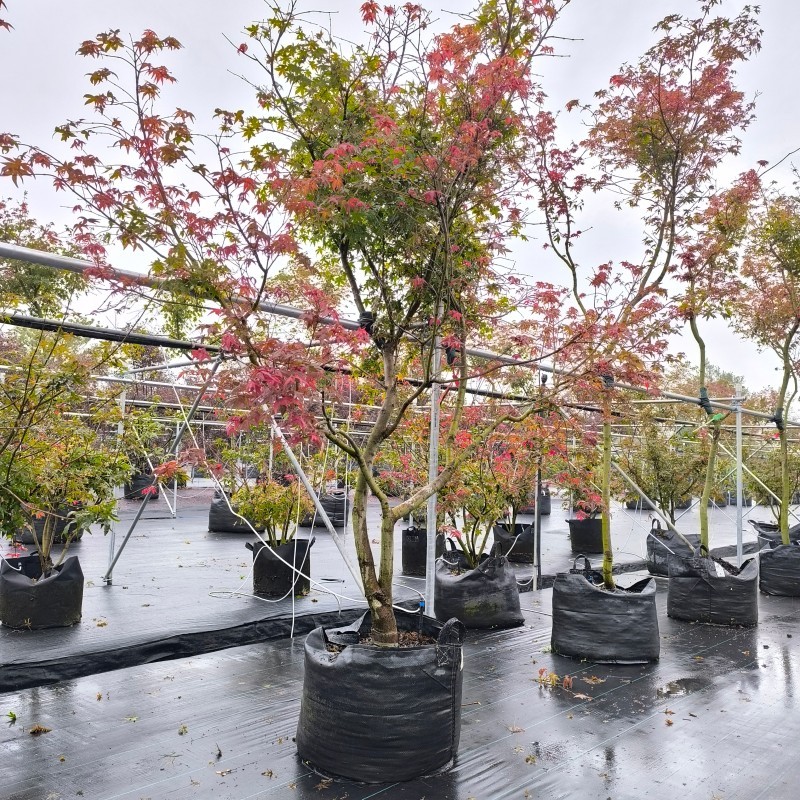
Growing Maple Trees in Grow Bags: A Complete Commercial Guide
Maple trees are popular landscape plants because of their attractive leaf colors, strong ornamental value, and adaptability to different garden environments.
For commercial nurseries, producing high-quality maple trees requires more than simply placing plants into containers. Root development, water management, growing media, and transplant preparation all influence final plant quality.
Grow bags have become an increasingly popular solution because they provide a better root environment compared with traditional rigid containers.
1. Why Grow Maple Trees in Grow Bags?
Traditional plastic pots often create a problem known as root circling.
When roots reach the container wall, they continue growing along the edge and form tangled root systems.
This can lead to:
•Poor nutrient absorption
•Slower growth
•Difficult transplant recovery
Breathable grow bags solve this problem through air pruning.
When roots reach the breathable fabric surface, exposure to air naturally stops excessive root extension and encourages the development of smaller feeder roots.
A healthier root system helps maple trees establish faster after planting.
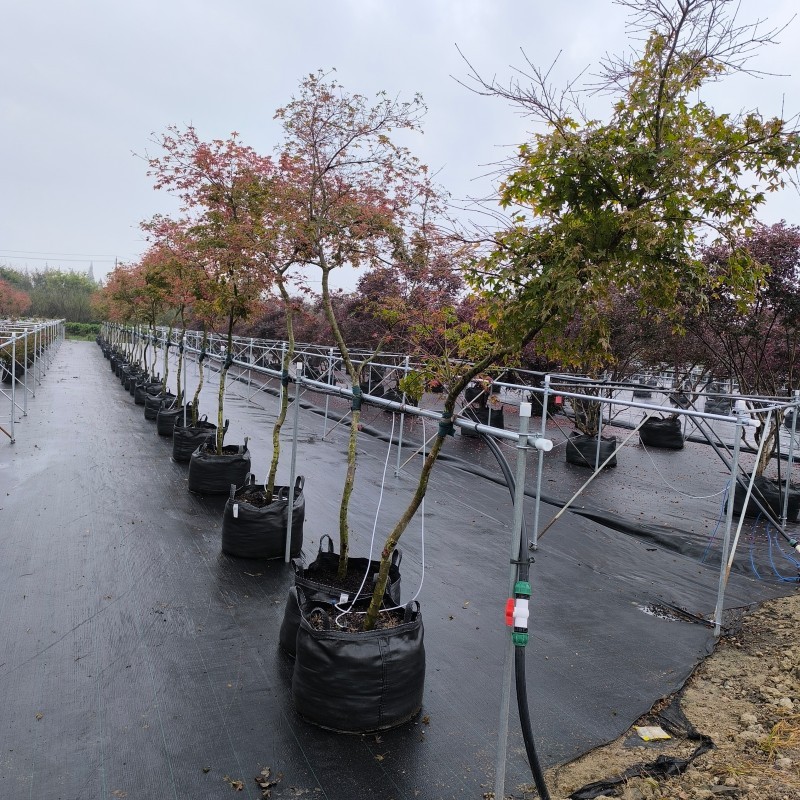
2. Choosing the Right Grow Bag Size for Maple Trees
The correct grow bag size depends on several factors:
Tree Age
Young maple trees require smaller containers, while mature trees need more root space.
Growing Period
If trees will remain in containers for several years, choosing a larger volume container prevents root restriction.
Final Planting Purpose
Trees produced for:
•Garden centers
•Landscape projects
•Urban planting
may require different container sizes.
A common mistake is choosing a container based only on current plant size.
Professional growers should consider future root development.
3. Growing Media Selection for Maple Trees
The growing medium directly affects root health.
A good mixture should provide:
Good Drainage
Maple trees do not perform well in constantly waterlogged conditions.
Good Air Space
Roots require oxygen for healthy growth.
Nutrient Retention
The medium should hold enough nutrients while still allowing water movement.
Many professional growers use combinations of:
•Peat moss
•Coco coir
•Compost
•Perlite
•Bark materials
The exact formula depends on climate and production conditions.
4. Water Management in Grow Bags
Grow bags usually drain faster than plastic containers, which is beneficial but requires proper irrigation management.
Common mistakes include:
Underwatering
Fabric containers can lose moisture faster during hot weather.
Overwatering
Frequent watering without checking moisture levels may waste water and reduce root oxygen.
Best practices:
•Check moisture regularly
•Adjust irrigation according to weather
•Use drip irrigation for commercial production
5. How Air Pruning Improves Maple Tree Root Quality
One of the biggest advantages of breathable grow bags is improved root structure.
Compared with traditional containers, air-pruned roots are usually:
•More fibrous
•More evenly distributed
•Better prepared for transplanting
For maple trees, strong roots are especially important because they help plants adapt after moving into landscapes.
This is why many nurseries use grow bags as professional root pruning containers.
6. Seasonal Considerations for Growing Maple Trees
Maple trees respond strongly to seasonal changes.
Spring
Important period for:
•New growth
•Nutrient management
•Root development
Summer
Pay attention to:
•Water requirements
•Heat stress
•Sun exposure
Autumn
A critical period for:
•Preparing trees for sale
•Reducing transplant stress
Winter
Protect roots from extreme cold depending on local climate.
The flexibility of grow bags allows nurseries to move plants when necessary.
7. What Commercial Nurseries Should Look for in Grow Bags
When purchasing grow bags, professional growers should evaluate:
Fabric Strength
The material should support long-term outdoor use.
Breathability
Good airflow improves root development.
UV Resistance
Important for nurseries producing plants outdoors for multiple seasons.
Stitching Quality
Strong seams prevent failure when plants become heavier.
Handle Design
Useful for moving large container-grown trees.
8. Why Professional Nurseries Choose HOKBG Grow Bags
HOKBG focuses on producing professional PP grow bags for commercial horticulture.
Our grow bags are designed to support:
•Healthy root development
•Long-term outdoor cultivation
•Easy plant handling
•Different climate conditions
Key features include:
•UV-resistant PP material
•Strong fabric structure
•Breathable design
•Reinforced handles
•Custom solutions for professional growers
Contact HOKBG for Professional Grow Bag Solutions
If you are growing maple trees, ornamental trees, or landscape plants and need reliable grow bag solutions, HOKBG welcomes you to contact us.
We can provide:
•Product information
•Technical specifications
•Sample support
•Professional recommendations based on your plants and climate
Contact HOKBG today to discuss the right grow bag solution for your nursery project.